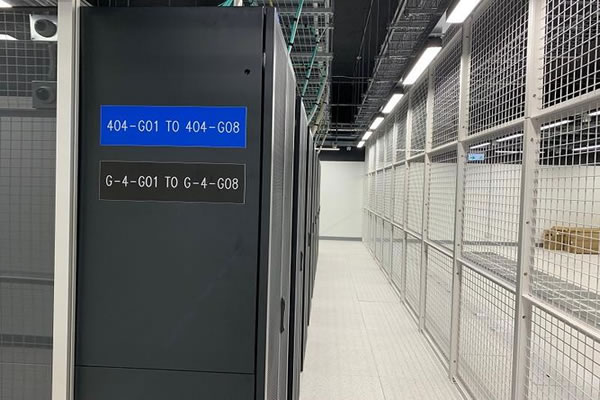
this article conducts a systematic analysis on the topic of "authoritative comparison of network and security evaluation in thailand's cloud server company rankings" based on public testing methods and common industry indicators. the goal is to provide technical decision-makers seeking thai cloud services or cross-border deployment with structured and comparable network and security assessment points to help quickly identify key risks and performance differences.
evaluation methods and data sources
the evaluation uses multi-dimensional indicators, including active measurements (latency, packet loss), measured reports (sla, event records), public statements (protection mechanisms) and third-party compliance certification. the data sources are mainly public documents, test probes and industry white papers, avoiding reliance on a single sample to ensure robust conclusions.
network connectivity and latency assessment
network connectivity focuses on international exports, cross-border link stability and average latency. compare access delays, peak fluctuations, and packet loss rates in thailand and neighboring countries, and focus on performance during peak hours to determine the impact of network jitter on business experience.
bandwidth vs. throughput capabilities
bandwidth capabilities not only look at the nominal peak value, but also focus on sustainable throughput, uplink and downlink symmetry, and burst traffic carrying capacity. the evaluation focused on measuring concurrent connection processing capabilities, long-term connection stability, and link slowdown and jitter under concurrent stress testing.
anti-ddos and traffic cleaning capabilities
anti-ddos capabilities include detection speed, cleaning capacity and refined rule capabilities. focus on comparing cleaning trigger thresholds, false positive rates, and response strategies to different types of attacks (syn, udp, http flood) to understand whether local or cloud distributed cleaning services are available.
impact of edge deployment and node distribution
the geographical distribution of edge nodes directly affects access delay and business disaster recovery. the evaluation focuses on the number of nodes, direct connections with major operators, and whether it supports intelligent routing and anycast, and evaluates the acceleration effect of edge strategies on static content and dynamic services.
identity and access management (iam) and network firewalls
security evaluation includes fine-grained iam, role separation and multi-factor authentication capabilities, while also reviewing network layer firewalls, acl policies and security group implementations. the focus is on ease of use and verifiability of management operability, audit trails, and least privilege controls.
encryption, key management and data isolation
examine encryption strategies, supported algorithms, and key lifecycle management for data transmission and data at rest. also pay attention to whether customer master keys, hardware security module (hsm) integration, and network isolation and logical partitioning capabilities between instances are provided.
compliance, auditing and third-party certification
evaluate whether the service provider discloses third-party security audit reports and meets regional privacy and data protection requirements (such as data residency and access control). demonstration of compliance helps assess long-term compliance risks and cross-border compliance costs.
monitoring, logging and intrusion detection response
a complete monitoring and logging system is the basis for security situational awareness. focus on comparing log integrity, real-time alerts, intrusion detection/intrusion prevention (ids/ips), and incident response drill frequency to evaluate the average time from detection to recovery.
sla, incident response and operations support
sla terms should clarify network availability, performance guarantees and response time limits. reviews focus on troubleshooting processes, support channels (in local languages), backup and recovery strategies, and the vendor's response performance and transparency during major historical incidents.
summary and selection suggestions
under the framework of "authoritative comparison of network and security evaluation in thailand's cloud server company rankings", it is recommended to make selections based on business priorities: priority is given to edge nodes and direct connection capabilities for delay-sensitive applications; for security-sensitive businesses, focus on self-management of keys, ddos cleaning and compliance certification. actual selection should be made based on independent test results and repeatable sla terms, and multi-layer backup and cross-regional disaster recovery solutions should be reserved to reduce single-point risks.
- Latest articles
- Why Do E-commerce And Video Platforms Need Japanese Native IP Websites To Ensure A Good Experience?
- Survival Strategies And Differentiated Service Explorations For Small And Medium-sized Vendors In The U.S. Server Hosting Industry
- How To Quickly Raise The Entry-level Salary Tier Of Hong Kong IDC Data Centers Through Certificates And Project Experience
- A Practical Guide To Comparing Malaysian Cloud Server Price Lists For Different Models And Bandwidth Options
- Where To Buy Taiwan Native IPs With Legal And Compliant Buying Guides
- Which Cloud Server In Vietnam Is A Good Case, Sharing Best Practices And Implementation Experiences Across Different Industries
- Gaming Industry Special Edition: Thailand Acceleration Server Rankings And Player Experience Report
- IP Reputation And Blacklist Risk Management When Choosing Hong Kong Multi-IP Server Hosting
- How Cross-border Developers Can Choose A German VPS Hosting Solution That Is Compliant And Supports GDPR
- In-depth Analysis Of The Pros And Cons Of Hong Kong Server CN2 And A Guide For Small And Medium-sized Enterprises To Buy
- Popular tags
-
Application Of Green Energy-saving Technology In Thailand Computer Room Construction And Energy-saving Benefit Calculation Case
this article introduces the application scenarios of green energy-saving technology in the construction of computer rooms in thailand, including refrigeration, liquid cooling, energy efficiency management, renewable energy, etc., and gives energy-saving benefit calculation cases and implementation suggestions based on pue improvement. -
Designer-recommended Collection Of Pictures Of Luxurious Airplane Suites In Thailand: Classic And Trendy Styles
Designers recommend a comprehensive collection of images of luxury aircraft suites in Thailand, analyzing the design elements, materials, colors, lighting, and layout of classic and popular styles. Combined with local Thai scenes and image display suggestions, it facilitates SEO and GEO optimization. -

Thailand Server Sales Market Analysis And Development Prospects Discussion
This article conducts an in-depth analysis of the Thai server sales market, discusses the market status, development trends and future prospects, and provides reference for enterprises.